


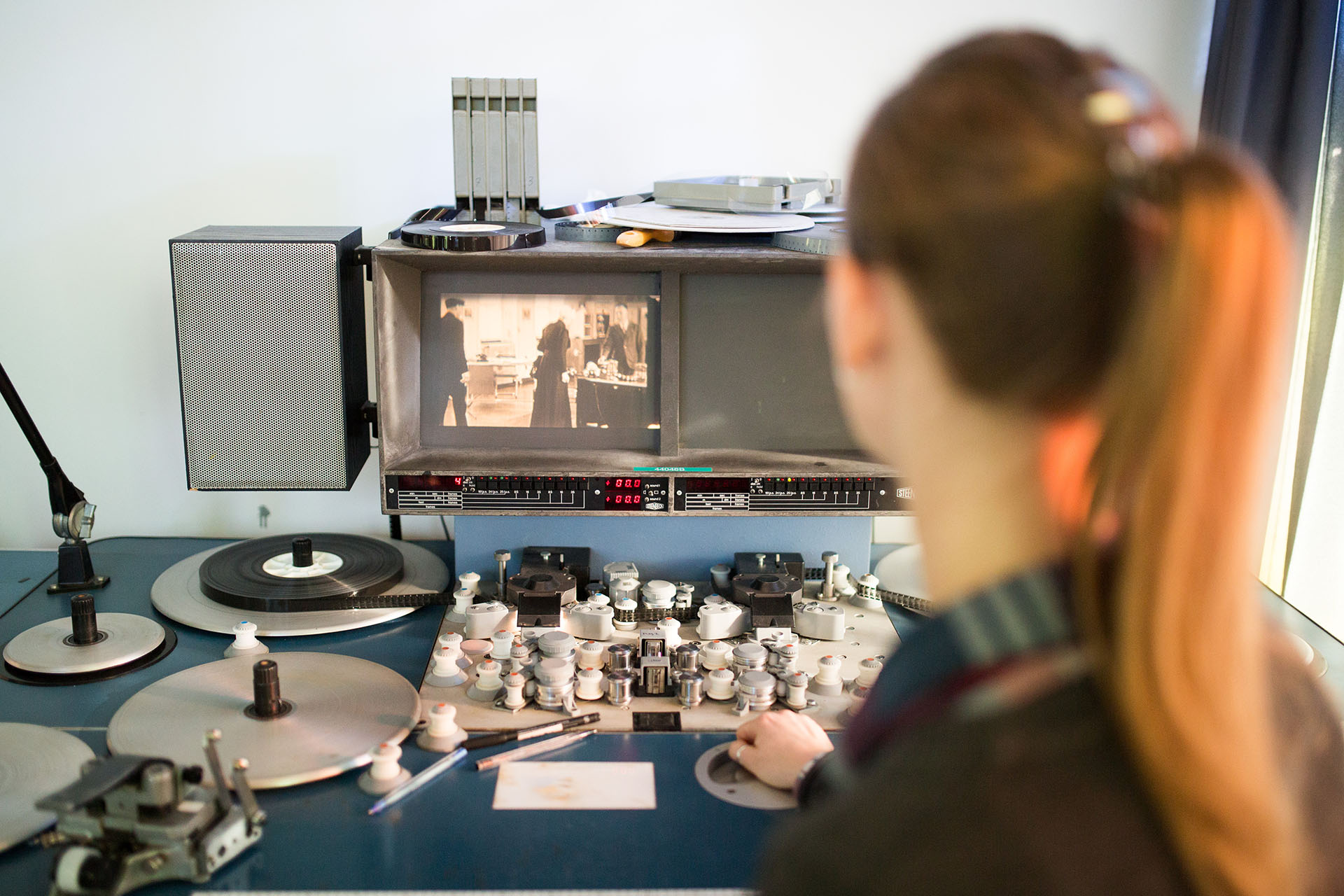
Contents: 1. Introduction 2. Things to consider before starting a diligent search 3. Conducting a diligent search 4. Appropriate sources for sound recordings 5. Appropriate sources for Films 6. Appropriate sources for stage plays, radio plays and audio books 7. Appropriate sources for unpublished films and sound recordings 8. Appropriate sources for film and sound recordings under the EU Directive …
Story-based Video Retrieval in TV series using Plot Synopses
Contents: 1. Introduction 2. Related Work 3. Text-Video Alignment 4. Story-based search 5. Evaluation 6. Conclusion 7. References This paper present a novel approach to search for plots in the story- line of structured videos such as TV series. In section 3 the researchers of the Karlsruhe Institute of Technology describe how they achieve this. They align natural language descriptions …
So you want to reuse digital heritage content in a creative context? Good luck with that.
Contents: 1. So much stuff, such poor interfaces 2. The shackles of Copyright, part 1: aesthetic 3. The shackles of Copyright, part 2: cowardice 4. Image quality 5. Checking the maker privilege Conclusion In this blog the author, Director of the UCL Centre for Digital Humanities and Professor of Digital Humanities in UCL’s Department of Information Studies, mentions several obstacles …
Applications and implications of digital audio databases for the field of ethnomusicology
Contents: Introduction I. From wax cylinders to digital audio sounds: The CNRS – Musée de l’Homme audio archives II. The Telemeta platform architecture: A collaborative platform for digitized sounds III. Online audio database: Ethics and intellectual property rights (IPR) IV. Digital audio sounds as vehicles of knowledge Conclusion This paper, whose subtitle is: A discussion of the CNRS — Musée …
Visualizing the Emotions of American Television News
The latest GDELT Project release is a new dataset of all 540,000 hours of English-language American television broadcasts held by the Internet Archive’s Television News Archive processed to extract the complete list of people, organizations, disambiguated locations, and more than 2,238 emotions and themes from each broadcast. The complete dataset (only the extracted metadata, not the broadcasts themselves) is available …
Persistente identifiers : identificatiemechanismes in het digitale tijdperk
Voor verwijzingen op het web is een veelheid aan mechanismes ontwikkeld. Dit artikel schetst kort de vormen van identificatie en lokalisering die gangbaar zijn: URL, URI en URN. Het URL systeem is in gebruik voor het adresseren van webpagina’s. De URI voor het localiseren én het identificeren van objecten op het web. En de URN is bedoeld voor identificatie. Vervolgens …